How A Bizarre 5-Second Outback Ritual Melts Away Puffy Face & "Cement Legs" Overnight
I wore ivory heels to my daughter's baby shower — after 4 years trapped in orthopedic slippers. Even my specialist can't explain it.
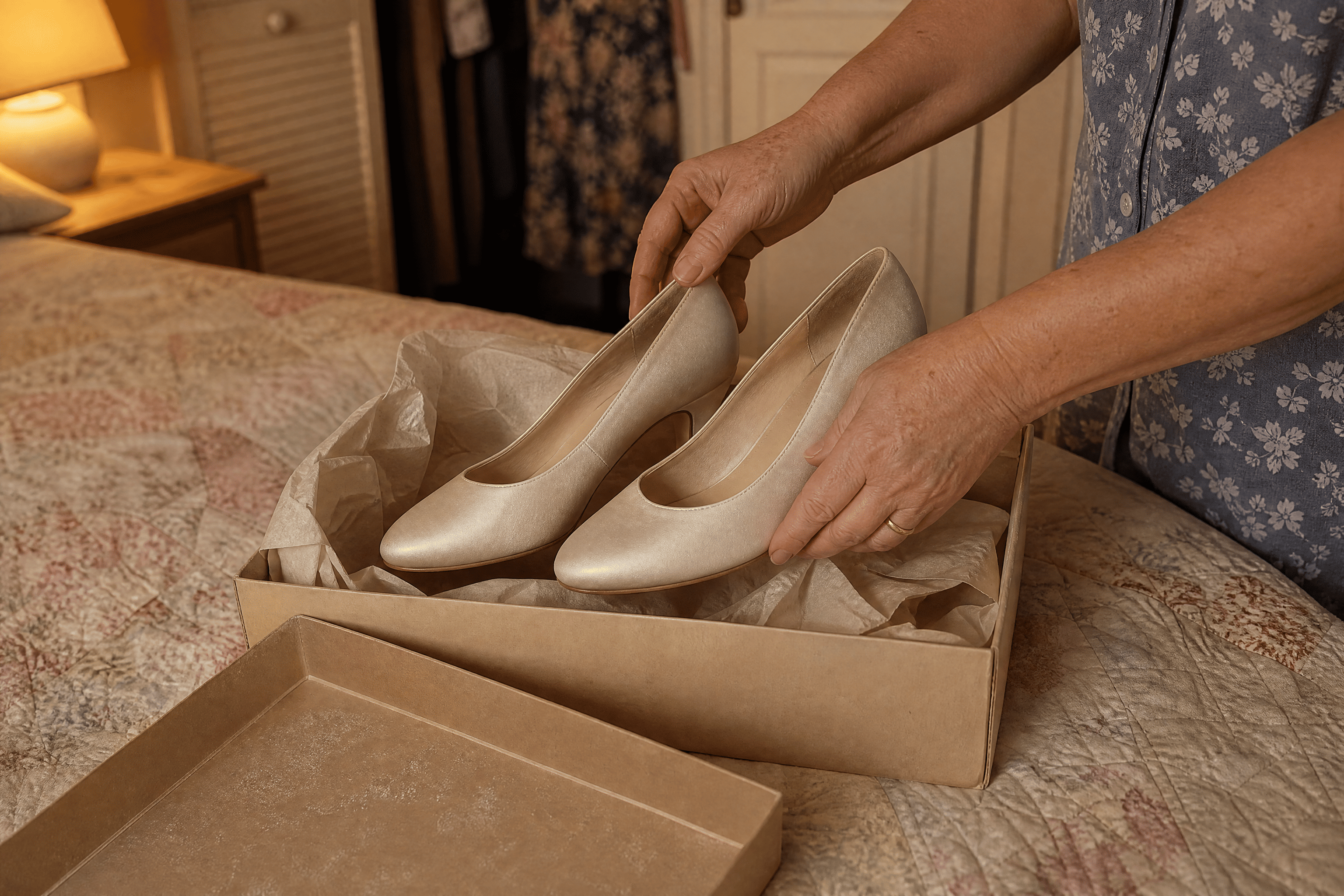
They were ivory silk pumps with a 2-inch heel.
I'd bought them 14 months before my daughter Emma's wedding.
They sat in their box, in tissue paper, at the top of my closet for two full years — waiting for a foot that would never fit.
Because by the time Emma's wedding day arrived, I couldn't zip up a boot. Couldn't slide into a sneaker. Couldn't wear anything but the stretched-out orthopedic slip-ons that had become my prison since 2019.
I sat in the front row of the ceremony in what were essentially padded sacks strapped to my feet.
I never got up to dance at the reception.
And I cried about those pumps for weeks afterward.
Not because they were expensive.
Because they were proof of what my body had become.
I was 62 years old. A retired schoolteacher. A grandmother of three.
And ever since the diagnosis in 2019 — the surgery, the six weeks of radiation that destroyed 14 of the lymph nodes under my left arm, and the chronic venous insufficiency that had cascaded through my legs by year two — I hadn't recognized myself in a photograph.
My legs weren't legs anymore. They were pale, waterlogged sandbags — hard as brick by afternoon, tender to the touch by night, constantly ringed with pressure grooves from whatever compression garment I'd wrestled into that morning.
My left arm, on the side that had taken the brunt of the radiation, was the same. So swollen I hadn't worn a bracelet or a watch in almost four years.
And my face… my face had become someone else's.
I'd stopped taking photos. Stopped video calls with my grandchildren. Stopped even looking at the front-facing camera on my phone.
Because the woman I saw looking back — puffy-cheeked, chinless, eyes swallowed by her own swollen face — wasn't me anymore.
The doctors had two names for it, actually: secondary lymphedema layered on top of severe chronic venous insufficiency. Two conditions tangled together in my file, both marked "chronic." Both marked "progressive." A permanent side effect of what the radiation had done to my lymphatic system. One that only got worse every year.
And I'd tried everything they told me to try.
$400 for the first pair of custom compression sleeves. Three times a year for replacements. Every replacement day was a fresh humiliation — the fitter measuring my swollen limbs, pretending not to notice as I flinched.
$180 per session on manual lymphatic drainage massage. Twice a week.
That's over $18,000 a year — just to feel slightly less swollen for a day and a half at a time.
Then came the pneumatic compression pump. A $5,000 medical device I strapped my legs and arms into for an hour every morning and every evening. It sounded like a broken vacuum cleaner. It squeezed until my skin turned white. It gave me one hour of relief before the fluid came surging back.
Then the water pills. They drained me until I was dizzy and couldn't stand. They wrecked my kidneys. They gave me leg cramps so bad I woke up screaming at 3am.
Then the elimination diet. No sugar. No dairy. No grains. No nightshades. No caffeine. No alcohol. No joy.
Then Ozempic — three months of weekly injections that dropped 12 pounds of muscle and left my legs just as swollen as the day I started.
Then the surgical consultation. $22,000 out of pocket for lymphovenous anastomosis — a microsurgery that "might" improve drainage. My insurance denied it three times. I was on a waiting list to appeal again.
Then the vibration plate. The rebounder. The Epsom salt baths. The dry brushing. The castor oil packs. The mushroom coffee. The turmeric capsules.
None of it worked.
And here's the part nobody warned me about…

I stopped sleeping.
My legs would throb at 2am like they had a heartbeat of their own. My left arm would go numb from the shoulder down. My face would swell so badly by morning I couldn't open my eyes all the way.
I'd lie awake from 3am until sunrise, staring at the ceiling, running the same terrible math in my head:
If I'm this swollen at 62… what do I look like at 65?
At 70?
My specialist finally told me the truth at my last check-up.
"Deborah — the lymphedema won't reverse. Our best-case scenario is slowing the progression. You need to make peace with this being your body now."
Make peace.
At 62.
With arms and legs that hurt to touch. A face I couldn't look at. And a closet full of shoes I hadn't worn in three years.
Like I was just supposed to hand over the rest of my life to this thing.
Then something happened I still can't quite explain.
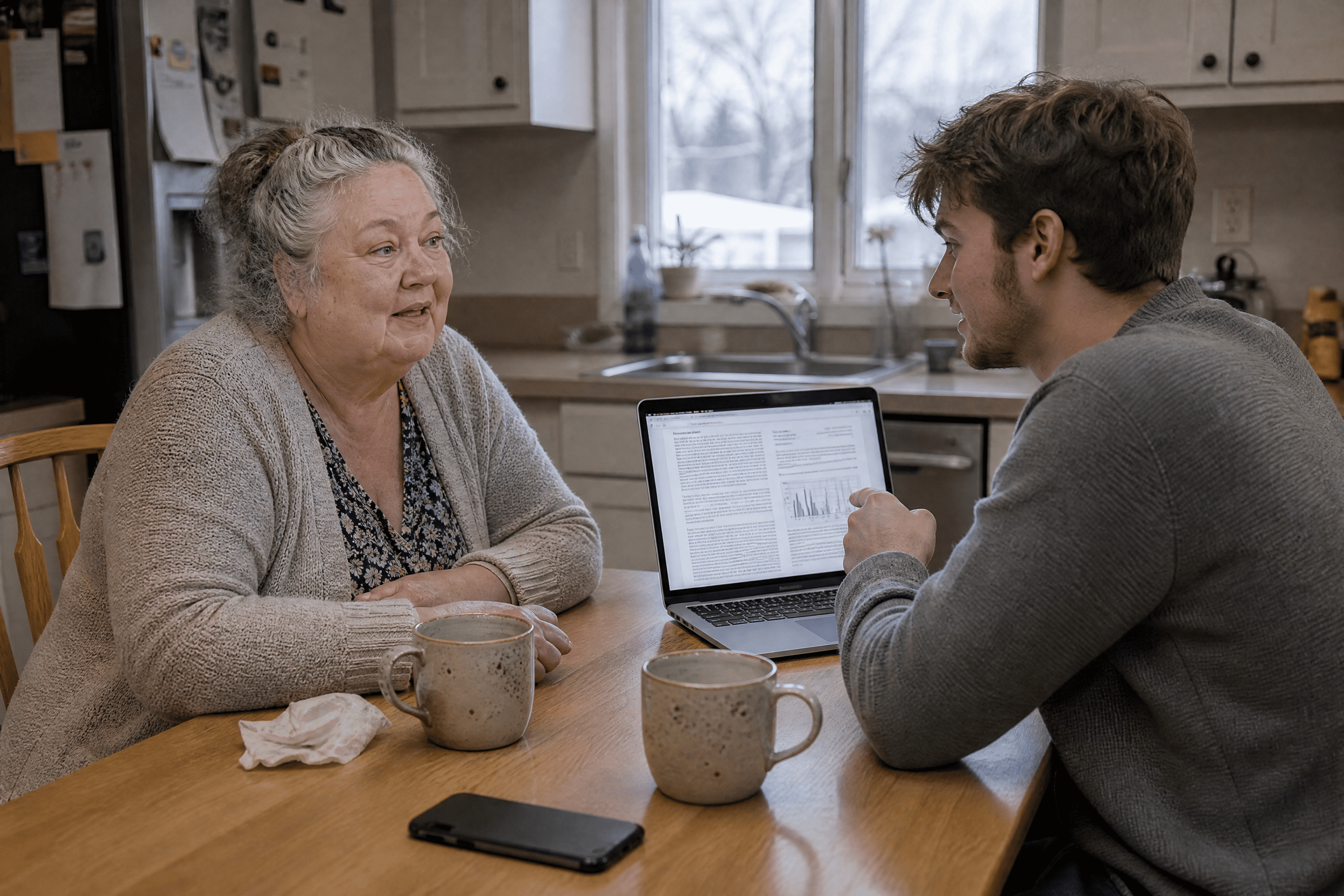
My nephew Marcus — a third-year medical student at Johns Hopkins — was home for winter break. We were sitting at my kitchen table drinking coffee, and he asked me how the swelling was.
I burst into tears.
He listened for almost an hour. I told him everything — the sleepless nights, the missed dance at Emma's wedding, the ivory pumps in the box. The specialist's "make peace with it." The math I did in the dark.
And then he said something that stopped me cold:
"Aunt Deb — have you ever heard of LTB4?"
I hadn't.
He pulled out his laptop. He showed me a research paper by a Stanford professor named Dr. Stanley Rockson — who'd spent 30 years studying what actually causes chronic swelling. Not the swelling itself. The invisible molecule underneath it.
A signaling molecule called Leukotriene B4 — or LTB4.
The paper described LTB4 as a hidden inflammatory "poison" that:
Blocks the body's natural lymphatic repair mechanisms.
Traps fluid inside tissues that should be draining freely.
Hardens soft swelling into permanent, fibrous, cement-like tissue.
And creates a runaway inflammation cycle that gets worse every single year — no matter how many compressions, massages, or surgeries you throw at it.
Marcus told me it wasn't just theoretical.
Rockson had proven — in peer-reviewed lab studies — that blocking LTB4 could actually reverse lymphedema. Not just manage it. Reverse it. Regenerate lymphatic vessels. Reopen drainage pathways. Even soften fibrotic tissue that had hardened for years.
But that was only half the story.
The strangest part was buried on page 14 of the paper.
A footnote referencing a 40-year Australian government health study.
A tribal population living deep in the outback — over 15,000 people tracked across four decades of medical records.
Zero cases of lymphedema.
Zero cases of chronic edema, "cankles," or puffy legs.
Not low. Not rare. Zero.
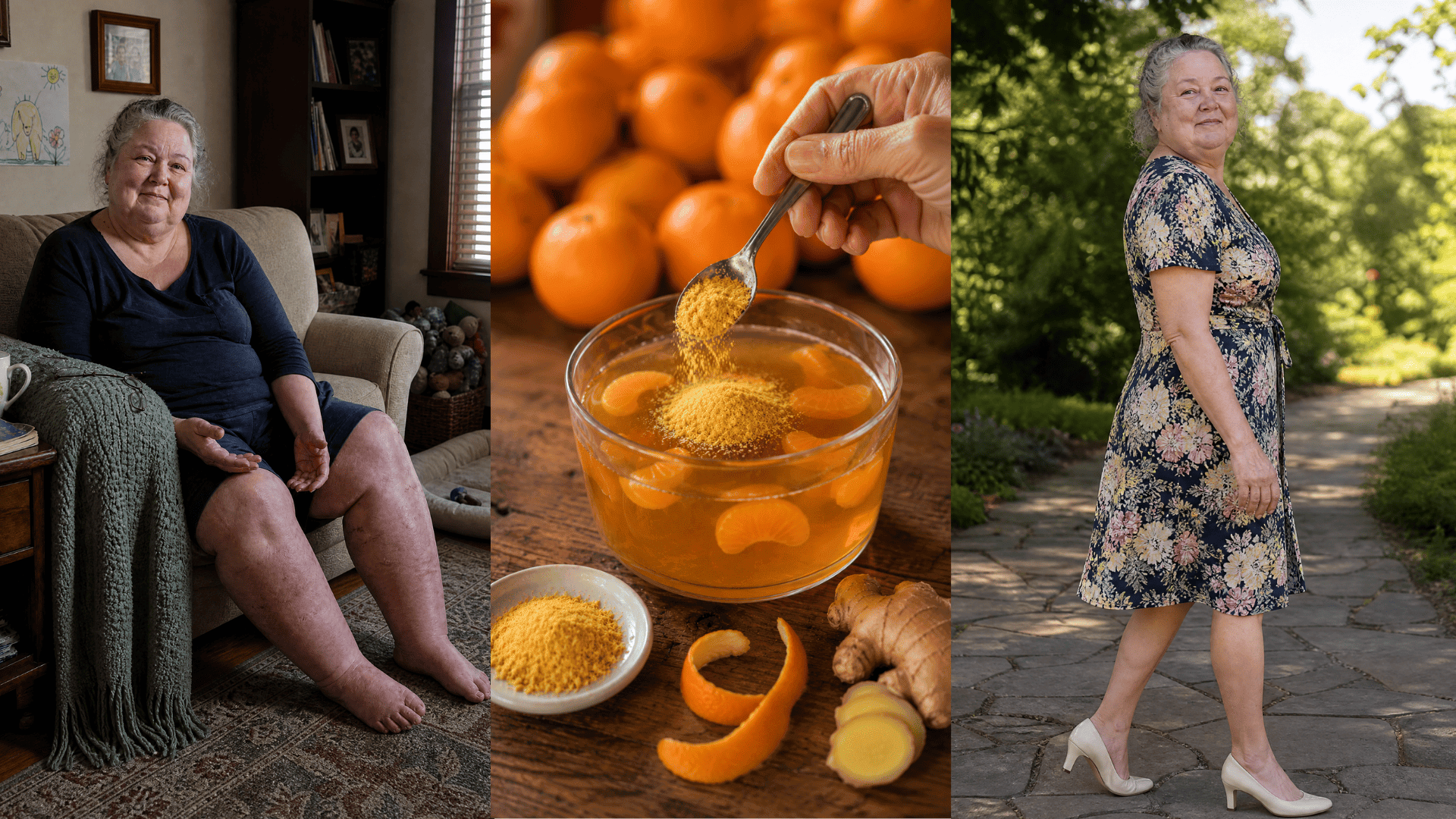
And every single morning, at sunrise, they did the same simple 5-second ritual.
Marcus called it "the Outback trick."
I read that paper three times that night.
I'm not going to spoil it here — you should look at it yourself — but I'll tell you this:
It took me under a minute the next morning. And it cost me less than a cup of coffee.
I tried it at 6:30am.
Day 1: nothing.
Day 2: nothing.
Day 3: still nothing.
Day 4: I sat on the edge of my bed crying, convinced I'd been fooled again.
But Marcus was texting me every night from Baltimore. "Auntie — give it two weeks. That's what the study said."
So I kept going.
Day 8.
I woke up and sat up in bed like I did every morning.
And my left arm swung out of the covers.
It swung.
For the first time in almost four years, my left arm didn't feel like a waterlogged sponge attached to my shoulder.
I stared at it. I bent it. I extended it. I turned it slowly in the sunlight coming through the blinds.
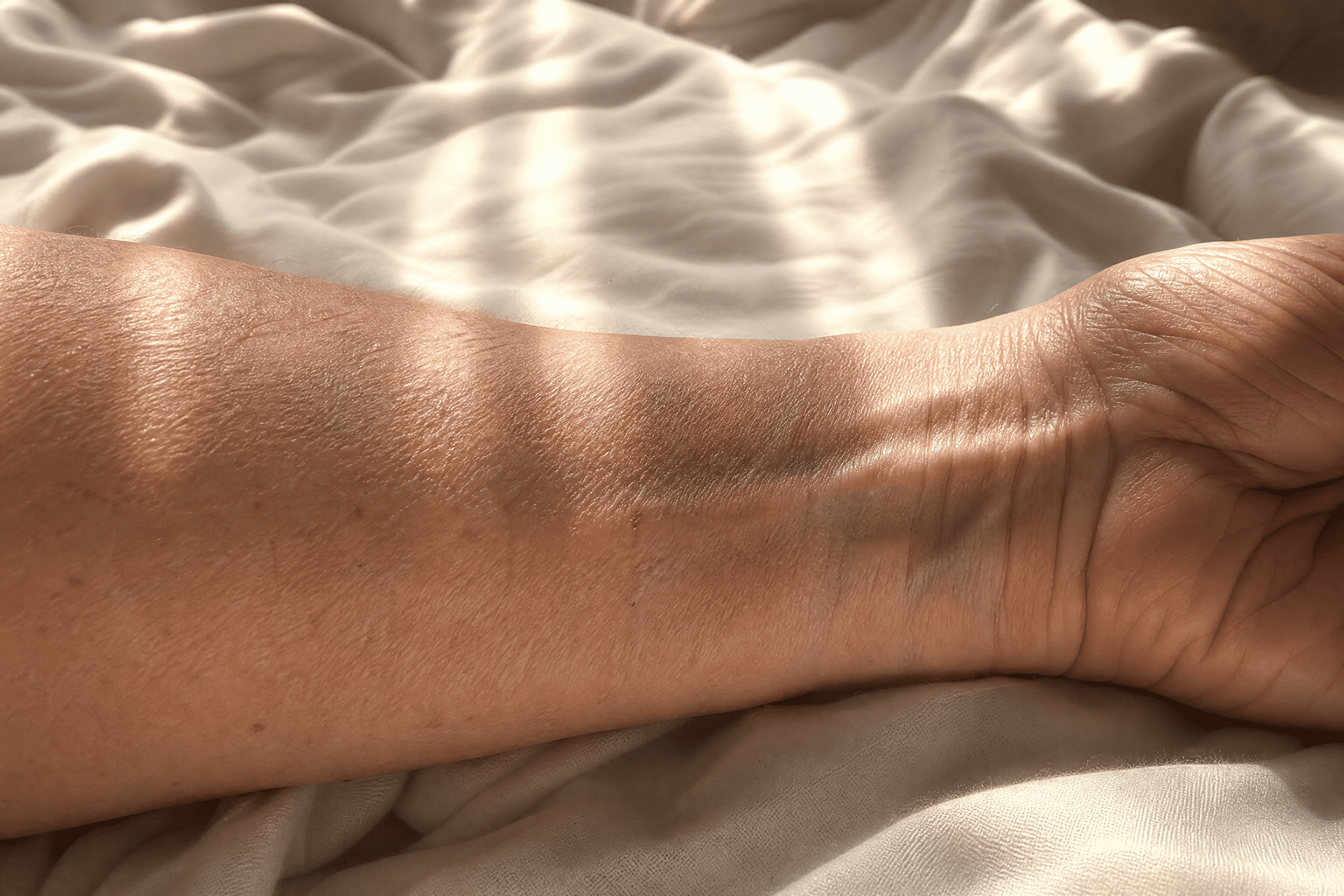
There was a wrist crease.
An actual visible wrist crease — right where my hand met my arm.
I hadn't seen it since 2020.

I stumbled downstairs to show my husband. He was pouring coffee. I held out my arm, wordlessly.
He set the pot down. He held my wrist gently in both his hands. And he started to cry.
The next morning, I woke up and looked at my ankles.
Still swollen. But not the way they'd been the morning before.
Softer. Looser. Almost — pliable.
By Day 12, my compression sleeves were sliding down my arm. My knee-high stockings pooled around my ankles.
By Day 16, I took them all off. Just to see.
By 9pm that night — no rebound swelling.
None.
I put my compression sleeves in a drawer and haven't put them back on since.
By Day 21, I stood on the scale for the first time in a year.
19 pounds lighter*.
Not from dieting. Not from Ozempic. Not from anything except letting the trapped fluid finally — finally — leave my body.
I called my specialist and asked for bloodwork.
I sat in the exam room bracing for bad news. Instead she said:
"Deborah — your inflammation markers are the lowest I've seen since we opened your file. Your kidney function is textbook. Your CBC is perfect. And your lymphedema and CVI markers…"
She paused. She scrolled. She scrolled again.
"…I've been treating lymphedema for 22 years. I've never seen anything like this."
She leaned back. She gave me that tired half-smile doctors get when they're about to ask a question they don't quite expect an answer to.
"Deborah — are you doing something you haven't told me about? Are you paying for those high-end drainage massages?"
I laughed out loud.
Absolutely not.
I told her about Marcus. About the Rockson paper. About the Outback ritual.
She wrote LTB4 down on the back of her prescription pad.
"I'm going to look this up tonight," she said. "You may have just changed how I practice."
I sat in my car in the parking lot afterward and cried for a full 20 minutes.
Not because my arms and legs were coming back.
Not because I'd dropped 19 pounds of trapped water.
Not because I'd finally slept through the night for the first time in three years.
But because for the first time since the diagnosis in 2019 — I recognized the woman in the rearview mirror.
Then something happened at week seven that I still tell my daughter about.
Emma called to invite me to her baby shower.
My first grandchild.
She'd been carefully planning it around my swelling — a venue with elevator access, plenty of seating, a text to all the relatives ahead of time asking them not to comment on my legs.
I told her something I never thought I'd say:
"Honey. I'm wearing the ivory pumps."
She went silent on the phone.
"…Mom. Are you sure?"
I sent her a photo of my ankles that afternoon.
She wrote back three words: "OH MY GOD."
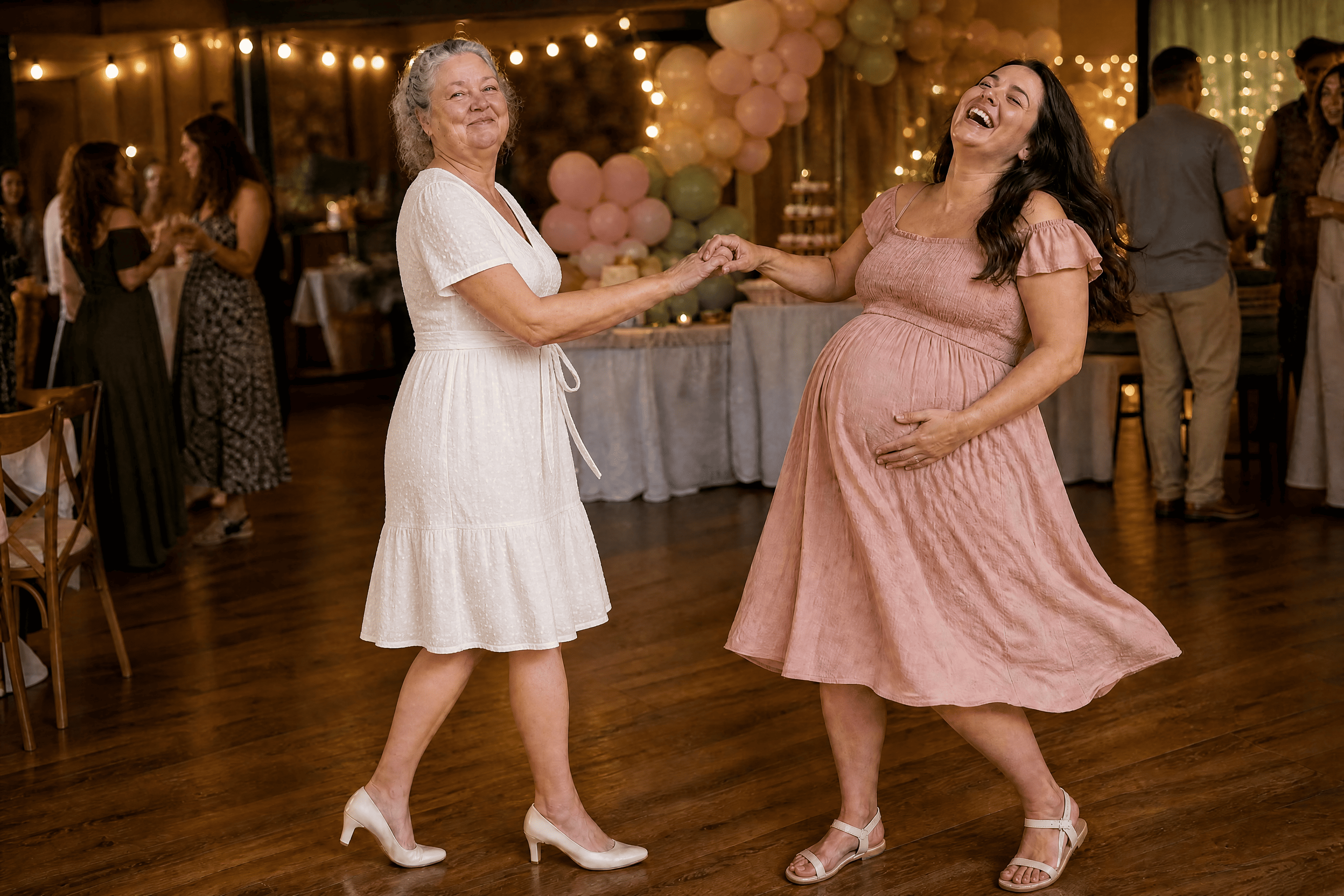
Two weeks later, I walked into her baby shower in the pumps I'd bought four years earlier.
They fit.
They didn't just fit — they slid on.
I danced with my daughter. I stood for two hours to greet every guest. I posed for every single photo the photographer asked me to be in.
That night I looked at those pictures for the first time in years — not to hide from them.
To save them.
My face. My cheekbones. My smile.
Me.
I'm 63 now. It's been eight months since Marcus showed me the Rockson paper.
My weight is stable. My compression garments are collecting dust in the drawer where I put them. My specialist has taken me off her twice-yearly monitoring schedule entirely.
And every morning at sunrise, before my husband wakes up, I do the same simple 5-second ritual I did on Day 1.
It still takes under a minute.
It still costs less than a cup of coffee.
But my body is doing — naturally, and for free — what I was spending $18,000 a year trying to force.
What people are spending $22,000 on failed microsurgeries to chase.
What people are strapping themselves into $5,000 pneumatic pumps for.
All because someone finally showed me the inflammatory molecule that was actually causing it.
I wasted three years wrapping myself in compression bandages every single night.
Three years of swollen mornings and sleepless middle-of-the-night math.
Three years of hiding from cameras and turning down invitations.
Three years of my grandchildren asking their mother why Grandma looked "puffy" in every photo.
And it wasn't the surgery, the pump, the pills, or the massages that finally fixed it.
It was the 5-Second Outback Trick.

So if you're reading this at 2am with your legs propped up on three pillows — hoping the swelling will go down by morning — I want you to hear something.
You don't have to "make peace" with this.
You don't have to accept a wheelchair at 65.
You don't have to hand over the next 20 years of your life to a "chronic, progressive condition" — no matter how many doctors have told you it's incurable.
You just have to look at this Outback ritual.
That's all.
Just look at it.
Because three years from now — when you're wrapping your legs like a mummy at 10pm and dreading another swollen, sleepless morning — I don't want you wishing you'd tried something different today.
Tap the button below and check it out right now.
Light & easy,
Deborah F.